Developing Tools and Solutions
JSFoundation invests in practical, locally appropriate tools that let communities capture more value from what they grow, rather than exporting raw crops. Equipment such as drying tables, grinding tools, and oil presses has been introduced to allow leaf, seed, and oil processing to happen at village level. A milling machine funded through the program enabled local production of cooking oil, body oil, and soap, creating new product lines for women's groups to sell. Processing units are distributed across villages for smaller-scale work, with a central facility handling larger volumes or more technically demanding processes. Tool choices favor simplicity and local repairability over high-tech solutions that would be difficult to maintain in a rural district with limited infrastructure. Water storage tanks represent another core tool investment, addressing a recurring constraint across both farming and school programs. Product development work has extended beyond Moringa to other plants and techniques, including batik-making and other craft skills requested by women's groups. A dedicated product developer role supports ongoing innovation, training group members and inventing new product variations based on local interest and market feedback. Standardization of processing methods is an active area of focus, aimed at maintaining consistent quality as production scales up. The long-term goal is a community-owned processing capability that operates at a larger, more commercially viable scale while remaining locally managed.
Microloans and Local Business
JSFoundation supports local entrepreneurship through small, typically interest-free loans aimed at helping individuals or groups complete or launch a viable local business. One example is a loan extended to a small hospitality business in Karatu town, structured with a clear monthly repayment schedule over roughly a year and channeled through a trusted local partner organization rather than paid directly. Loan terms are kept simple and personal: modest amounts, no interest, and a requirement that the borrower communicate proactively if a payment is at risk. Repayments are collected locally and tracked against an agreed schedule, with the local partner organization responsible for disbursement oversight and financial reporting back to JSFoundation. Beyond individual loans, the foundation supports women's processing groups that generate income by producing and selling Moringa-based goods such as powder, oil, and soap. These groups operate at village level, with a central, larger-scale processing facility handling higher-volume or more technically demanding production such as oil extraction. Business coaching accompanies the financial support, covering topics like pricing, quality control, and reaching local and eventual international buyers. The approach favors long-term relationships over one-off grants, with loans and business support extended only where there's a credible path to self-sustaining operation. Local businesses funded this way are expected to eventually operate independently of ongoing foundation support. The broader aim is economic resilience — giving people practical tools to build income-generating activity rather than ongoing dependency on aid.
School Food Forests
The school food forest program brings vegetable gardens, fruit trees, and Moringa plantings onto school grounds across the project area, giving children direct, daily exposure to nutritious food they help grow themselves. The initiative now reaches several dozen schools spread across two wards in Karatu District, combining physical infrastructure with a nutrition and environmental curriculum. Each participating school typically receives a "school kit" covering plant care, healthy eating habits, and climate-adaptation topics such as tree planting. Water access is a recurring constraint, so many schools also receive water storage infrastructure to keep gardens producing through dry periods. Teachers and designated "environmental teachers" at each school are trained to manage the food forest and pass on the knowledge, ensuring the program doesn't depend solely on outside staff. Site visits precede installation at each school to determine the best location for planting given space, water access, and soil conditions. Students in several schools have taken part in inter-school competitions built around Moringa cultivation, adding a motivational and social dimension to the work. A cross-border element connects some classes with a partner school in Belgium, giving children on both sides exposure to each other's daily life and food culture. Follow-up visits check on plant survival and growth, with replanting done where needed rather than treating installation as a one-time event. The program has grown from an initial pilot cohort of schools to a much larger network, with further expansion planned as funding and capacity allow.
Farmer Training Programs
JSFoundation's farmer training work is centered on the Agricultural Resource Center in Endamarariek Ward, a facility developed jointly with the local district council starting in 2016 to serve as a demonstration and coaching hub. Training focuses on diversifying subsistence farming practices, introducing Moringa oleifera alongside other indigenous and medicinal crops such as chaya, hibiscus, and lemongrass. Demonstration plots and nurseries allow farmers to see improved soil and water management techniques in practice before adopting them on their own land. Coaching covers climate adaptation methods including erosion control, wind breaking, and water capture, addressing the increasing unpredictability of rainfall in the region. Trainers work directly with farming families, moving beyond one-off awareness sessions toward sustained, multi-year engagement. A regional partner organization coordinates day-to-day coaching activities and manages the demonstration sites, while JSFoundation contributes technical material, specialist knowledge, and funding. Additional demonstration sites have been established in outlying villages to extend the reach of training beyond the original center. Some farmers progress from small trial plantings to dedicating significant portions of their land to the newly introduced crops. The program has expanded geographically over time, moving from an initial ward into a second, larger ward as trust and results built up locally. In total, tens of thousands of trees have been planted through this coaching effort since the program began.
Our Impact
We believe in showing what works. Through our projects, we create measurable impact in the lives of women, farmers, and young people—while ensuring that every contribution is used responsibly.
We share our results, track our progress, and work closely with local partners to ensure our impact is real, sustainable, and built to last.
Real impact.
Full transparency.
Impact at a glance

Women trained

schools supported

trees planted

locations using food forest produce

Teachers trained to teach students

5000L Watertanks established

Microloans
Current projects
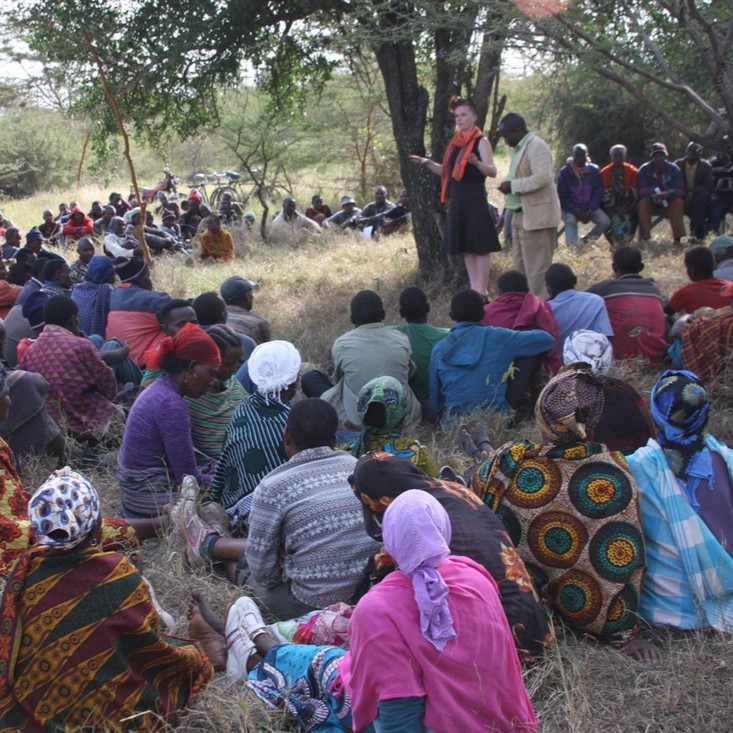
Farmer training programs
Supporting small-scale farmers with sustainable techniques and business skills.

School food forests
Creating gardens and learning environments that improve nutrition and education.
Microloans & local businesses
Helping individuals start and grow their own income-generating activities.
Developing tools & solutions
Designing practical tools and products that improve daily life and support sustainable livelihoods.
How we use your support
- Direct support for local projects and training
- Development of tools and sustainable solutions
- Collaboration with local partners and communities
- Operations and coordination
Our partners
We work closely with trusted local partners and communities to ensure our projects are relevant, effective, and locally led.
Flagship Partners:
KSDI - Karatu Sustainable Development Initiatives
Karatu Sustainable Development Initiatives (KSDI) is a Tanzanian Non-Governmental Organization and Non-Profit, officially registered under the Non-Governmental Organizations Act No. 24 of 2002, registration number 00NGO/R/7590. KSDI is based at P.O. Box 9373, Karatu, Arusha, and is led by John L. Mahhu, Executive Chairman. Since 2016, KSDI has operated the Agricultural Resource Centre in Endamarariek Ward under a Memorandum of Understanding with Karatu District Council, and has been JSFoundation's core operational partner in the Endamarariek and Qurus Wards. KSDI's responsibilities span coaching and training of women's groups, day-to-day management of local and central processing units, quality control of production, and maintenance of JSF-funded equipment. The partnership with JSFoundation is formalized through a Memorandum of Understanding (2026–2029), building on prior MoU periods covering farming (2016–2019), processing (2019–2022), and geographic expansion (2022–2025).
TA - Tunza Africa
Tunza Africa (TA) is a Tanzanian Non-Governmental Organization, officially registered under the Non-Governmental Organizations Act of 2002, registration number 00NGO/R/4485, led locally by Clement Kingo who cooperates with JSFoundation since December 2016. In collaboration with its partners, Tunza Africa implements small-scale farming initiatives focused on reintroducing forgotten crops such as Moringa oleifera, through farmer coaching projects and the setup of food forests in schools across Karatu District, Tanzania. The organization actively engages farmers, women, schools, and local communities through school and farmer family training programs, the formation and support of women's groups, and the development of demonstration plots. Its activities also include water access and tree planting initiatives, nursery establishment, and the distribution of seedlings and seeds. A key component of this work is the operation of demonstration farms and plots, with two sites currently established in Bassodawish and Endamarariek villages, serving as training and coaching hubs for farmers. Since its formal local launch in 2023, Tunza Africa has grown alongside the broader Moringa programme, reflecting JSFoundation's approach of building local institutional capacity rather than operating directly.
How we ensure impact
We monitor our projects, evaluate results, and continuously improve our approach to ensure lasting, meaningful impact.